Get early access to AI-powered ad creative testing.
Why Does UGC Outperform Branded Creative on Every Metric?
UGC-style ads generate 4x higher click-through rates than standard brand ads, according to Meta's own creative research. On TikTok, native-feeling content outperforms studio-produced content by even wider margins. Across ecommerce categories, UGC ads deliver 20-40% lower CPA and 1.5-2x higher ROAS than polished branded creative.
User-generated content (UGC) is a category of ad creative produced by real people rather than the brand itself, designed to look and feel like organic social content. Meta's 2025 creative benchmarks identify it as the highest-performing format for ecommerce advertisers.
UGC ads outperform polished brand creative on nearly every metric: higher click-through rates, lower cost per acquisition, and stronger ROAS. The reason is simple — UGC looks and feels like content from a real person, not an advertisement. In an era where people have learned to ignore ads, content that does not look like an ad is the most effective ad format.
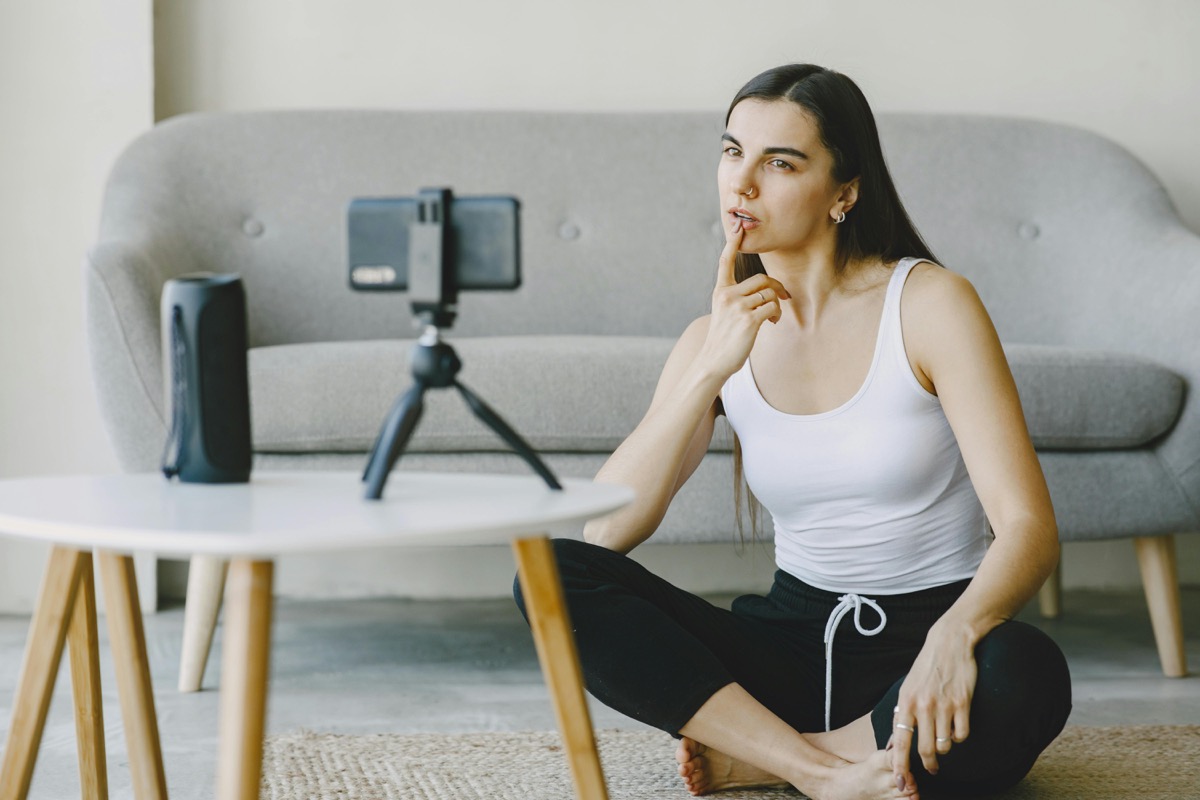
Content creator
This is not speculation. Meta's own research shows that UGC-style creative generates 4x higher click-through rates than standard brand ads. On TikTok, native-feeling content outperforms studio-produced content by even wider margins. For ecommerce brands running ad creative tests, UGC is not optional — it is a core creative format.
What Counts as UGC and What Does Not?
UGC splits into two types: organic (created voluntarily by real customers) and paid (commissioned from UGC creators for $50-200 per video). The critical distinction from influencer marketing is distribution — influencers post to their own audience for reach, while UGC creators produce content for the brand's paid channels. The creator's follower count is irrelevant; only content quality matters.
UGC is content created by real people rather than the brand itself. In the ecommerce context, it typically takes two forms:
Organic UGC: Content your actual customers create voluntarily — unboxing videos, product reviews, social media posts. This is the most authentic form but the least controllable.
Paid UGC: Content created by UGC creators — people who produce authentic-looking content for brands in exchange for payment or free products. This is scalable and controllable while still looking natural.
UGC is NOT influencer marketing. Influencers post to their own audience for reach. UGC creators produce content for your brand to use as ad creative. The creator's follower count does not matter — what matters is their ability to create authentic, relatable content. Data from Nielsen's Trust in Advertising report shows that 92% of consumers trust content from real people over brand-produced creative, which explains UGC's consistent performance advantage.
Where Can You Find Reliable UGC Creators?
The three main sourcing channels are UGC platforms ($50-500/video with vetted creators), direct social media outreach (lowest cost but highest effort), and your own customer base (most authentic content). Billo and Collabstr offer the fastest turnaround at $50-150 per video, while Insense provides managed services at $100-500 per video for brands wanting a hands-off process.
UGC Platforms
These platforms connect brands with vetted UGC creators:
Search TikTok and Instagram for creators already making content in your niche. Look for people with:
Authentic, relatable content style
Good camera quality and lighting
Natural speaking ability
Engagement rates above 3% (more important than follower count)
DM them directly: "Hi [Name], I love your content about [topic]. We make [product] and think your style would be perfect for some UGC content. Would you be interested in creating [type of content] in exchange for [payment/free product]?"
Your Customer Base
Your existing customers are your best potential UGC creators. They already use and love your product. Their content will be the most authentic because it comes from real experience.
How to source customer UGC:
Post-purchase email: "Show us how you use [Product] for a chance to be featured (and earn a $50 credit)"
Social media hashtag campaigns
Review incentives that include video
VIP customer programs that include content creation
You're on the list! We'll be in touch soon.
Want to test ad creative with AI?
Join the waitlist for early access to ConversionStudio.
How Do You Vet UGC Creators Before Hiring?
Request 3-5 portfolio samples and evaluate four criteria: natural delivery, production quality (lighting and audio), niche fit, and turnaround time. Most UGC creators deliver within 5-10 business days with one revision round included. Always get usage rights in writing — you need full permission to run content as paid ads across all platforms.
Not every creator produces usable content. Vet before committing:
Portfolio review. Ask for 3-5 examples of previous UGC work. Look for natural delivery, good lighting, clear audio, and content that feels authentic rather than scripted.
Niche fit. A creator who makes beauty content will not naturally create convincing fitness content. Match the creator to your product category.
Turnaround time. Ask about their delivery timeline. Most UGC creators deliver within 5-10 business days.
Revision policy. Clarify how many revisions are included. One round of revisions is standard. Unlimited revisions at a flat rate is a red flag for low quality.
Usage rights. Ensure you have full rights to use the content in paid ads, on your website, and across all platforms. Get this in writing.
Not sure which pain points to highlight in your UGC briefs? Find out what your audience actually cares about — try ConversionStudio's free signal scanner. Takes 3 minutes. Free. No pitch.
How Should You Brief UGC Creators for Best Results?
A structured brief with a hook-problem-solution-result-CTA framework produces 3x more usable content than a word-for-word script, according to Insense's 2025 creator performance report. The key is giving creators a structure to follow while letting them use their own words — scripted UGC sounds unnatural and underperforms by 40-60% on engagement metrics.
A clear brief is the difference between usable content and wasted money. Your brief should include:
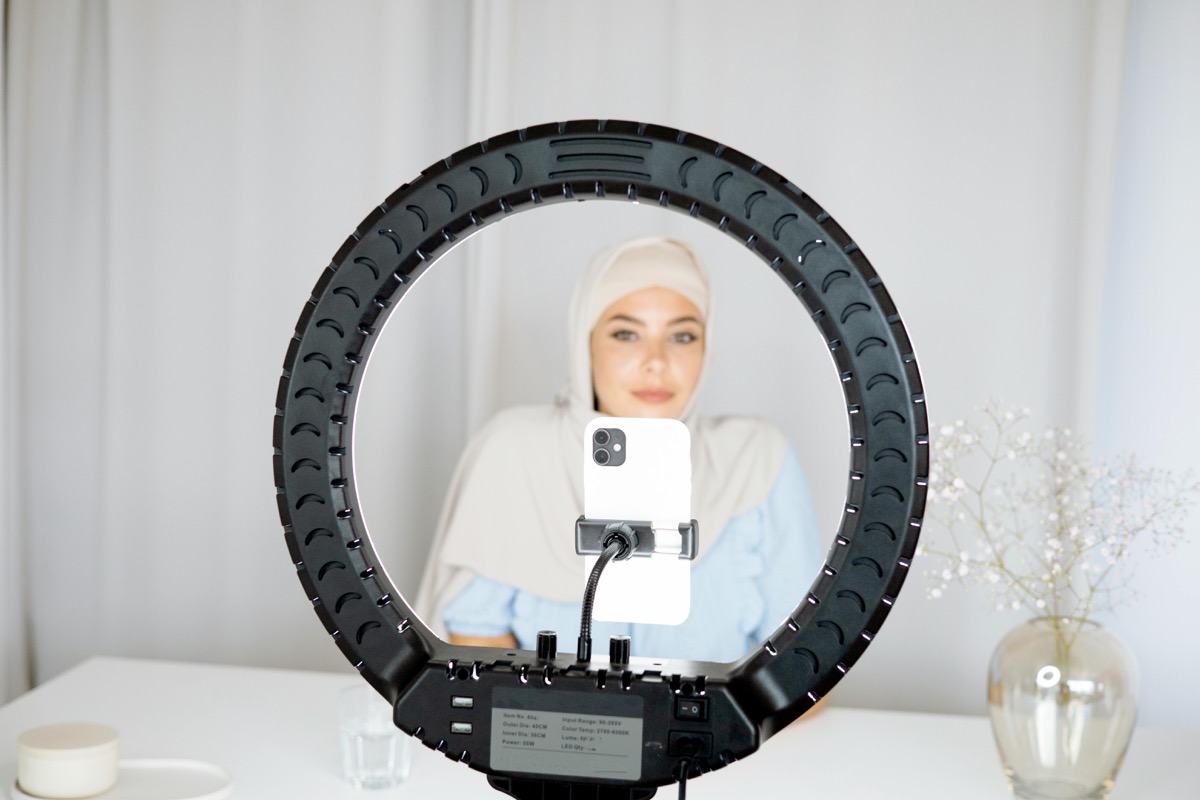
Ugc creator filming
The Script Template
Do not write a word-for-word script — it will sound unnatural. Instead, provide a structure:
Hook (first 3 seconds): Tell the creator what to say or show to grab attention.
Example: "Start by saying 'I've been using [Product] for two weeks and I have to show you something.'"
Problem (5-10 seconds): Describe the problem the product solves.
Example: "Talk about your experience with [problem] before finding the product."
Solution (10-20 seconds): Show or discuss the product.
Example: "Show the product, demonstrate how you use it, and describe the main benefit you've experienced."
Result (5-10 seconds): Share the transformation or outcome.
Example: "Show the before/after or describe how your routine has changed."
CTA (3-5 seconds): End with a recommendation.
Example: "End with something like 'If you deal with [problem], you need to try this.'"
Shot List
Specify any required shots:
Product unboxing
Product in use
Close-up of the product
Before/after comparison
Lifestyle context (at home, at gym, etc.)
Brand Guidelines
Tone: Casual and conversational, not corporate
Do not mention competitor names
Do not make medical or performance claims that cannot be substantiated
Include the product name naturally (do not force it)
What Does UGC Cost and What Should You Budget?
A 30-second UGC video costs $50-200 depending on creator experience and brief complexity. For a first testing batch, budget $500-1,500 for 5-10 videos from 3-5 different creators. This is still a fraction of a single professional video shoot, which typically runs $2,000-10,000+ for comparable output volume.
Content Type
Price Range
Notes
30-second UGC video
$50-200
Most common format for ads
60-second UGC video
$100-350
Better for educational/how-to content
UGC photo set (5-10 images)
$50-150
For static ad creative and social posts
UGC video + raw footage
$100-400
Raw footage lets you re-edit for multiple variations
B-roll package
$75-200
Product footage without voiceover — useful for editing
Tip: Order 3-5 videos from different creators for the same product. Different perspectives and presentation styles give you more material to test. The cost of 5 UGC videos is still a fraction of a single professional video shoot.
How Do You Turn Raw UGC Into High-Performing Paid Ads?
Three edits transform raw UGC into ad-ready creative: add burned-in captions (85% of Facebook video is watched muted, per Digiday), add a text hook card in the first 1-2 seconds, and trim ruthlessly to eliminate dead air. Brands that A/B test 3-5 hook variations per UGC video see 30-50% improvements in CTR, according to Motion creative analytics data.
Raw UGC needs minor editing before running as paid ads:
Add a hook card. A text overlay in the first 1-2 seconds that states the key benefit or pain point. This captures attention before the creator starts speaking.
Trim ruthlessly. Cut any dead air, filler words, or slow sections. The first 3 seconds must hook. Every second after that must earn its place.
Format for platform. 9:16 for Stories and Reels, 1:1 for Feed, 16:9 for YouTube. Ask creators to film vertically and leave space for cropping.
A/B test hooks. Take the same UGC video and swap the first 3 seconds with different text hooks. Test 3-5 hook variations per video. Track CTR and CPC to find the winner.
What Are Realistic UGC Performance Benchmarks?
UGC ads deliver 1.2-2.0% CTR compared to 0.5-0.9% for branded ads (2-3x improvement), 20-40% lower CPA, and 1.5-2x higher ROAS across ecommerce categories. These benchmarks come from aggregated Meta Ads data across DTC brands spending $10K-500K/month on paid social.
Metric
UGC Ads
Branded Ads
Difference
CTR
1.2-2.0%
0.5-0.9%
2-3x higher
CPA
20-40% lower
Baseline
Significant savings
ROAS
1.5-2x higher
Baseline
Major improvement
Engagement Rate
3-5x higher
Baseline
Much more engagement
These are averages across ecommerce categories. Your results will vary based on product, audience, and creative quality. Patterns across DTC brands suggest that UGC performance advantages are most pronounced in categories where social proof heavily influences purchase decisions, such as beauty, supplements, and fashion.
How Do You Scale a UGC Program Beyond Initial Testing?
Scaling means building a roster of 5-10 regular creators, briefing based on proven winning angles rather than guessing, and repurposing each video across 6+ channels (Facebook, Instagram, TikTok, email, website, product pages). Brands that systematize their UGC pipeline produce 10-20 new ad variations per month at $1,000-3,000 total cost.
Once you have proven that UGC works for your brand, scale it:
Build a creator roster. Work with 5-10 regular creators who understand your brand. Ongoing relationships produce better content than one-off projects.
Brief based on winning angles. Once you identify which ad angles perform best through testing, brief creators specifically around those angles. If "problem → solution" hooks outperform "unboxing" hooks, commission more problem-solution content.
Repurpose across channels. A single UGC video can become a Facebook ad, Instagram Reel, TikTok ad, email thumbnail, website testimonial, and product page video. Maximize the value of every piece of content.
Track and iterate. Monitor which creators, scripts, and formats perform best. Double down on what works. This is the same creative testing mindset applied to your UGC production pipeline.
Frequently Asked Questions
What is a UGC creator?
A UGC creator is a person who produces user-generated content — authentic-looking photos and videos — for brands to use in advertising and marketing. Unlike influencers, UGC creators do not need a large following because the content is used in the brand's own channels (paid ads, website, email), not posted to the creator's personal audience. Their value is in creating relatable, authentic content, not in reach.
How much should I pay UGC creators?
Expect to pay $50-200 per 30-second video and $100-350 per 60-second video, depending on the creator's experience and the complexity of the brief. Photo sets of 5-10 images typically cost $50-150. Prices are higher for creators with proven portfolios and faster turnaround. Start with affordable creators to test the format, then invest more in creators who produce content that performs.
Is UGC better than professional video for ads?
For most ecommerce brands, yes. UGC-style content outperforms professional studio content on social media platforms because it feels authentic and native to the feed. Users have been trained to skip content that looks like an ad, and professional production often triggers that filter. However, professional content still has its place on websites, landing pages, and brand channels where polished presentation builds credibility.
How many UGC videos do I need to start testing?
Start with 5-10 videos from 3-5 different creators. This gives you enough variety to test different angles, styles, and hooks. From those initial videos, identify which creator style and which message angle performs best, then commission more content in that direction. Budget $500-1,500 for your first batch.
ugc creatorsuser generated contentugc adsfind ugc creatorsugc ecommerce
Share
Written by
Faisal Hourani
Founder of ConversionStudio. 9 years in ecommerce growth and conversion optimization. Building AI tools to help DTC brands find winning ad angles faster.